


Aleutian Volcanoes
There are over 45
volcanoes of which are part of the Ring
of Fire in the Pacific Ocean.
Aleutian Islands
Over 167
named islands in the five major island groups, which
are the Fox
Islands, Islands of Four Mountains, Andreanof
Islands, Rat Islands, Near Islands and the Eastern
Islands, south of the Alaska Peninsula. Unimak
Island is the eight largest Island in the United
States, with Unalaska
Island being the thirteenth largest.
Aleutian Weather
The Aleutian Chain
is the birth place of the weather and storms that
impacts the west coast of Canada and the United
States. The Aleutian
Low will produce the williwaws that come screaming
down the narrow valleys and steep cliffs of the
Aleutians and Pribilofs Islands.
Sea
The Aleut Region splits
the north western hemisphere creating the Bering
Sea to the north and Pacific Ocean to the south.
The Pribilof Islands sit in the center of the Bering
Sea, which is the richest in the world for sea life
and home to the largest Northern Fur Seal rookeries.
Region summary
The Aleut Region is part of
the Ring of Fire, stretching over a thousand miles
into the Bering Sea and Pacific Ocean. The Aleutians
are the birth place for some of the wildest storms
known to man. Fish and marine mammals are abundant
in the waters surrounding the Pribilof and Aleutian
Islands.
The Aleut
people in the past and today call this place in
the world Home
Aleut
People
The Aleut people live and
subsist in one of the harshest and most beautiful
parts of the world. They need to have the best clothing,
dwellings, transportation and food to survive. And
still in the long winter days they manage to play
and recreate. The Aleut People and their:

Pauline
Dushkin
2007 Elder of the Year
Aleut
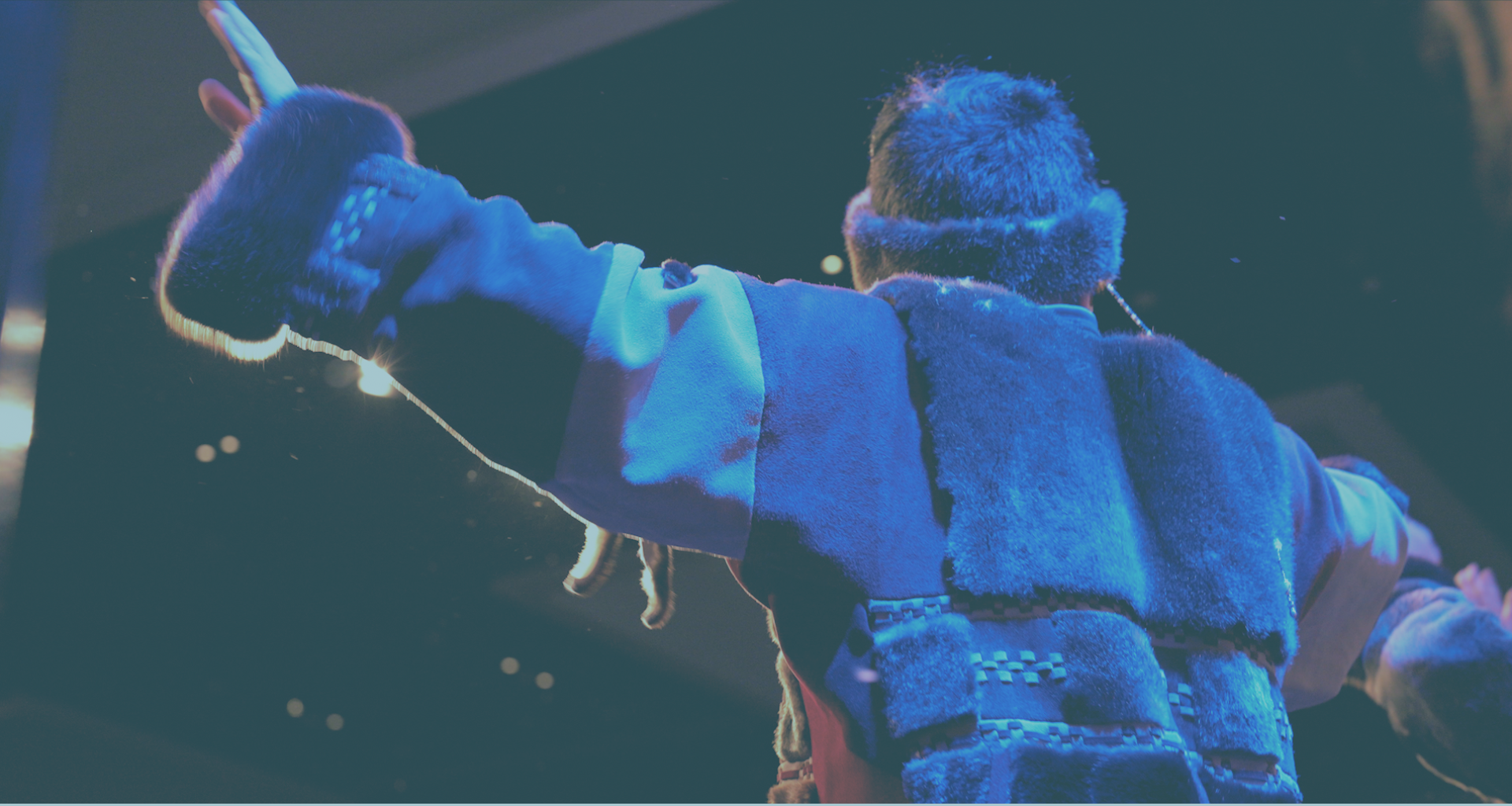
Clothing
In addition to skillfully
manufacturing the family clothing from materials
of their surroundings, the women made waterproof
garments from the intestines of sea mammals. They
were called kamleikas and were used by men going
to sea, and also used as ceremonial garments; these
were of a special design and had colorful ornamentation
made from bird feathers, soft animal furs and other
dyed materials.
The Aleuts layered their clothing for maximum protection
from the harsh elements. The Kamleika
or Rain Gear as we call it today is still needed
to stay dry in the Aleutians. Rain gear layered
with, fleece, wool or polypropylene wear is the
choice over animal skins and mammal gut for the
Aleut in the Aleutians.
The women were also expert and artful grass weavers,
this is confirmed by the preservation of ancient
Aleut
baskets, sleep mats, wall dividers, hand mitts
and foot coverings that have been recovered and
are displayed in museums, today. Some of the baskets
were woven so tightly that they were able to contain
water; this leads us to believe that hand mitts
and grass foot coverings were woven tightly enough
to repel water, keeping the hands and feet dry.

Aleut
Dwellings
Their homes were called
barabaras
which in the very early days were semi-subterranean
homes covered by earth and grass with entries through
the roof. Some were built large enough to house
several families; the larger dwellings were divided
by attaching several small rooms to a large group
room in the center.
The Aleut people were a communal people, where families
usually all lived in one dwelling. Today there is
still the closeness amongst family members and the
need to be connected, but for the most part, the
Aleuts today construct and live in single family
wood framed houses.

Aleut
Transportation
They were designers
and craftsmen of sea vessels called baidarka (Aleut
Journey 2005) which are well known for excellent
maneuverability over the ocean no matter what weather
conditions prevailed.
The one, two or three
hatched baidarka would travel for long periods
at sea before returning to the shore. They would
have to haul out to dry the skin on the baidarka.
Each craft was constructed to a specific size to
match the aleut paddler. The aleut paddler either
knelt or sat while paddling. Historically, it is
recorded that if the aleut paddler was appropriately
outfitted with a kamleika in a properly constructed
baidarka, they could roll completely over in the
sea and become upright again without being tossed
from the baidarka.
In the last century travel has changed dramatically,
after the Baidarka, the dory was a means of sea
travel, and today larger boats like the Alaska
Marine Highway ferries are the choice and mostly
the only way of sea travel in the eastern Aleutians.
Freight, as in food, oil and other durable goods
is still hauled by boat.
Today air travel is the way the Aleut people move
about in the Aleutians and Pribilofs. Reeves
Aleutian Airways and Peninsula
Airways were the pioneers in air travel in the
Aleut Region, and Pen Air today is still transporting
Aleuts amongst the Aleut Region villages.
Aleut
Food
The Aleut people ate
their food raw or uncooked, they would not stock
pile or harvest food for the winter or for hard
times. But they did dry some fish and meats and
render mammal fat to go along with the fresh foods
they gathered daily. Sea lion was one of the choice
marine mammals the Aleuts subsisted on, and the
reason they made their camps close to sea lion haul
outs. The Aleuts of Akutan hunted whale, hunting
whale was most noble of all Aleut hunts and took
place for only for the most fearless of the Aleut
hunters. Today, substance from the land and sea
still is a vital part of the Aleut culture. Fish,
as in salmon, halibut, and cod and also crab and
shrimp are consumed by the Aleut people in quantity.
Caribou and moose are the big game land animals,
and birds like ptarmigan, geese and ducks are also
subsisted by the Aleuts today. The Aleuts today,
still eat the traditional foods of their ancestors.
Aleut
Language
The Aleut
or Unangan (Eastern and Attuan) and Unangas (Atkan
or Western) language
was spoken by the Unangan/Unangas people before
the Russian fur traders and Scandinavian fishermen
came to the Aleutians. it wasn't uncommon an Aleut
spoke Aleut, Russian and English. But, today english
is the language the Aleut people communicate by.
Aleut
Today
Aleut people have the conveniences
of modern dwellings and technology, as well as many
other present day amenities. They hold fast to their
traditional culture and values by teaching past
and present Aleut customs to their descendants so
that, they too, can culturally teach and train the
following generations.

Honoring
the Past TAC Chairs
Past TAC Directors from 1971 to
Present